Table of Content
Focus on what matters. BIXO handles the rest!

Every project starts with hope, but without project controls, that hope can fade fast. One small delay appears, then another, and suddenly you are not sure where the project is heading.
This confusion grows when work keeps moving in different directions, updates are unclear, and the team begins to lose focus. It becomes hard for you to see what is going right and what is going wrong.
Project controls help you bring back clarity. They show you what is happening in real time and make it easier for you to guide the project. In this blog, you will learn what project controls are, why they matter, and simple examples that you can follow in your work.
What Are Project Controls?
Project controls are the tools, processes, and techniques used to plan, monitor, and manage a project from start to finish. They make sure the project stays on track, stays within budget, and meets its goals.
By tracking costs, timelines, tasks, risks, and quality, project controls help teams notice problems early, make better decisions, and keep the project moving smoothly. In other words, project controls give you a clear picture of how your project is performing and help prevent surprises along the way.
Why Are Project Controls Important?
Project controls are essential for keeping projects structured and running smoothly.
In fact, in a survey of construction‑sector projects, 90% of respondents agreed that project control is critical, and those who rated controls as “critical” were about twice as likely to meet all project objectives compared with those who rated controls as unimportant.
- Manage Risks Early: Project controls assist in finding potential issues before they become serious. Teams can prepare solutions in advance and avoid delays. This maintains the smooth running of the project.
- Maintain Quality: With project control, managers can check work at every step to maintain the quality standard. It ensures that teams identify errors early and correct them within a short period of time.
- Improve Team Coordination: Good coordination begins with clarity, and project controls provide exactly that. They simplify duties and timelines for everyone. When teams understand what and when to do it, the confusion reduces and the productivity increases.
What Are the Core Elements of Project Controls?
Project controls rely on various key elements to keep a project on track. Knowing these elements helps you plan better, track progress, and prevent issues early before they grow.
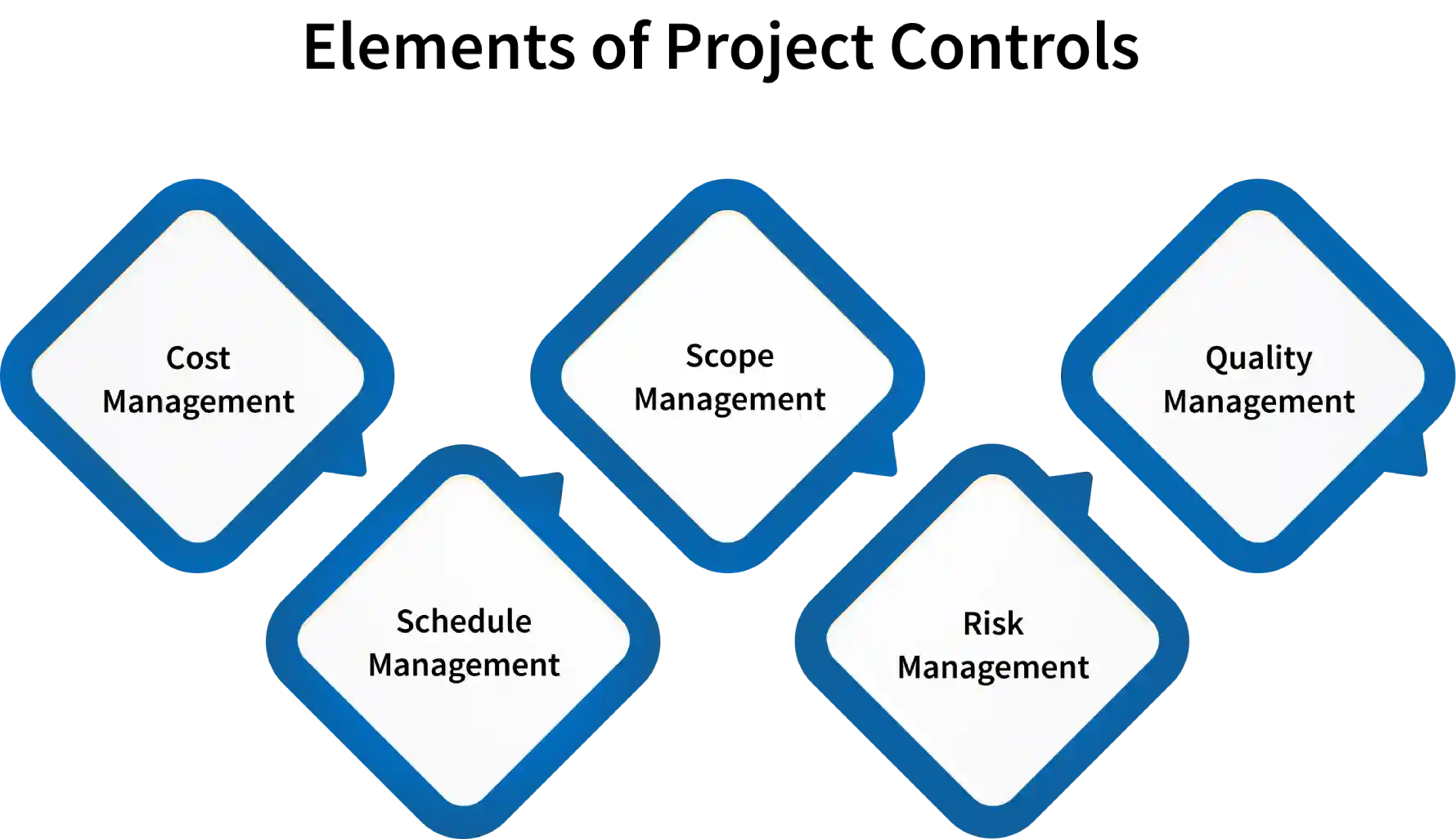
Cost Management
Plan and track your project budget carefully. By doing this, you can avoid overspending and make sure you use every pound wisely. This helps you identify cost issues early, control expenses, make informed financial decisions and use resources efficiently throughout the project.
Schedule Management
Keep your project timeline clear and organised. This helps you complete tasks on time and handle delays quickly, and ensures that every team member knows what to do. It also simplifies the process of monitoring progress and making changes when necessary.
Scope Management
Define exactly what your project will deliver and what it will not cover from the beginning. This keeps you and your team focused and ensures everyone stays clear on their tasks throughout the project. This reduces extra work and keeps everyone aligned on goals.
Risk Management
Look out for potential problems that could affect your project. Preparing solutions early helps you reduce their impact and keeps the project running smoothly. Regularly monitoring risks allows your team to respond quickly and keep problems from affecting the project’s progress.
Quality Management
Make sure your work meets the required standards at every stage. Regular checks let you fix issues before they grow, maintain consistent quality, and ensure the final outcome meets expectations without last-minute problems.
What Are the Examples of Project Controls in Project Management?
The following are some common examples of project controls that you can use in your projects:
- Budget Forecasts: Measuring current financial performance and predicting future project costs. These forecasts may include overtime expenses, material price changes, and delays.
- Schedule Controls: Tracking the current project timeline and forecasting upcoming deadlines. These controls help identify schedule issues early and support timely adjustments.
- Quality Assurance: Ensuring that project deliverables meet the standards defined in the project plan. Regular inspections help catch issues early and maintain consistent quality throughout the project.
Improve Project Performance through BIXO
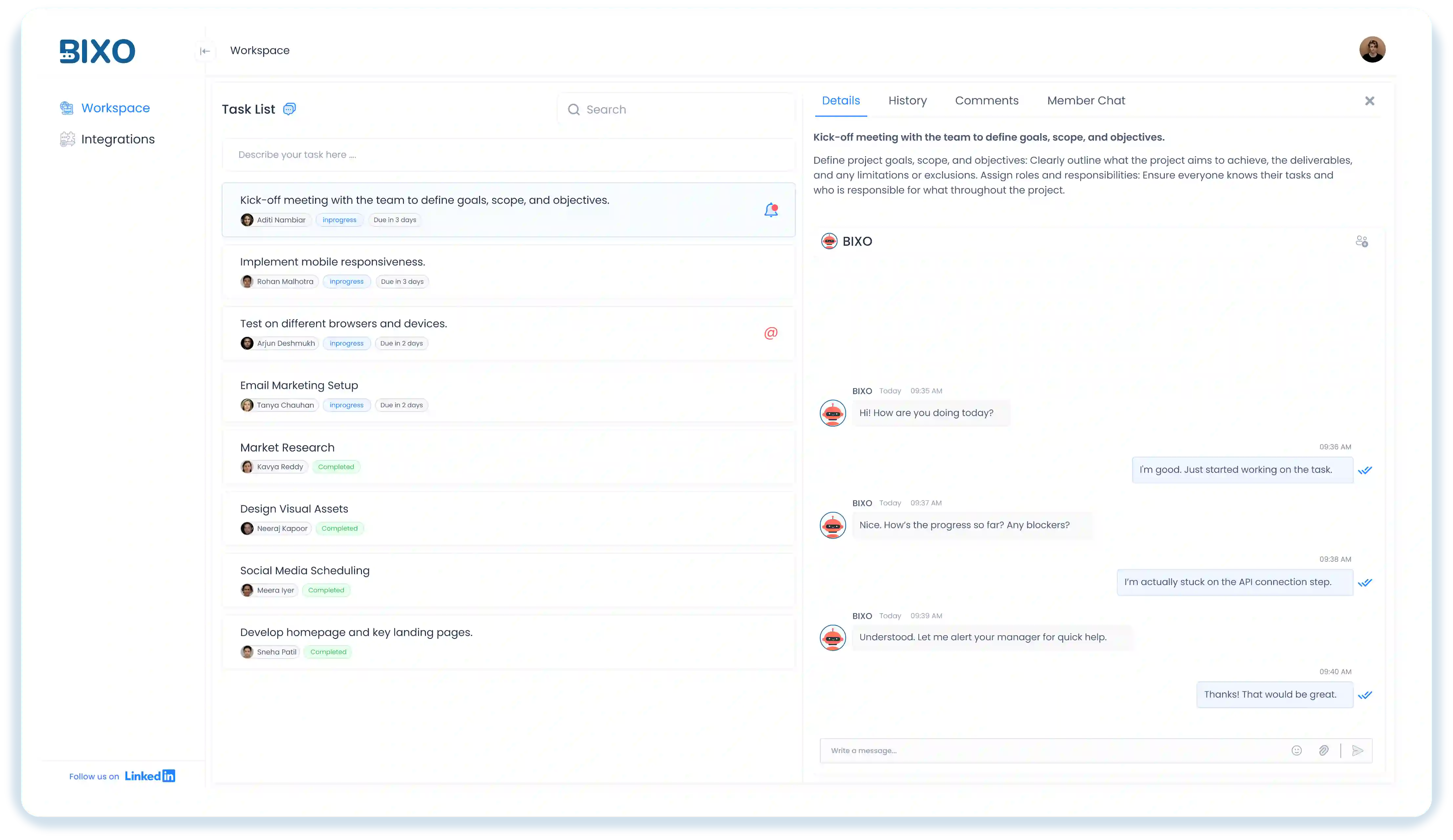
BIXO helps teams to work smarter and faster by ensuring that the projects remain on track with automated team follow-ups, task progress tracking, and generating detailed EOD reports. By reducing manual work and providing instant updates, teams can spot issues early, make quicker decisions, and maintain steady progress.
With BIXO handling the details, your team can focus on what really matters and deliver quality results on time. This helps make projects more predictable, efficient, and successful from start to finish.
Conclusion
Project controls give projects the structure they need to run smoothly from start to finish. They make it easier to spot issues early, understand where things are slowing down, and fix problems before they grow. With clearer updates and organised tracking, teams stay aligned and work with fewer delays.
These controls also improve decision-making by showing what is working and what needs attention. Overall, they help every project move forward with more clarity, stability, and confidence.
FAQs
Yes, project controls set clear expectations to ensure that everyone has an idea of what to do. This helps the team stay aligned and avoid confusion while working.
Teams update project controls regularly based on project activity, so they always have a clear and accurate view of progress.
Yes. Small teams use project controls to stay organised, avoid confusion, and manage work more smoothly.
By keeping an eye on costs and tracking spending, project controls help you spot overspending early and fix it before it becomes a bigger problem.
Get a demo of BIXO

Recommended Blogs
SWOT Analysis: The Four Key Parts with Practical Examples
Want to make smarter business decisions? Understand your business with a SWOT analysis, covering strengths, weaknesses, opportunities, and threats.
 Bhuvana Bitra |
 Oct 17, 2025
How to Delegate Tasks Effectively: 7 Tips for Managers
Learn how to delegate tasks effectively, save time, and boost team productivity with step-by-step tips, real examples, and smart AI tools.
Bhuvana Bitra |
Oct 17, 2025
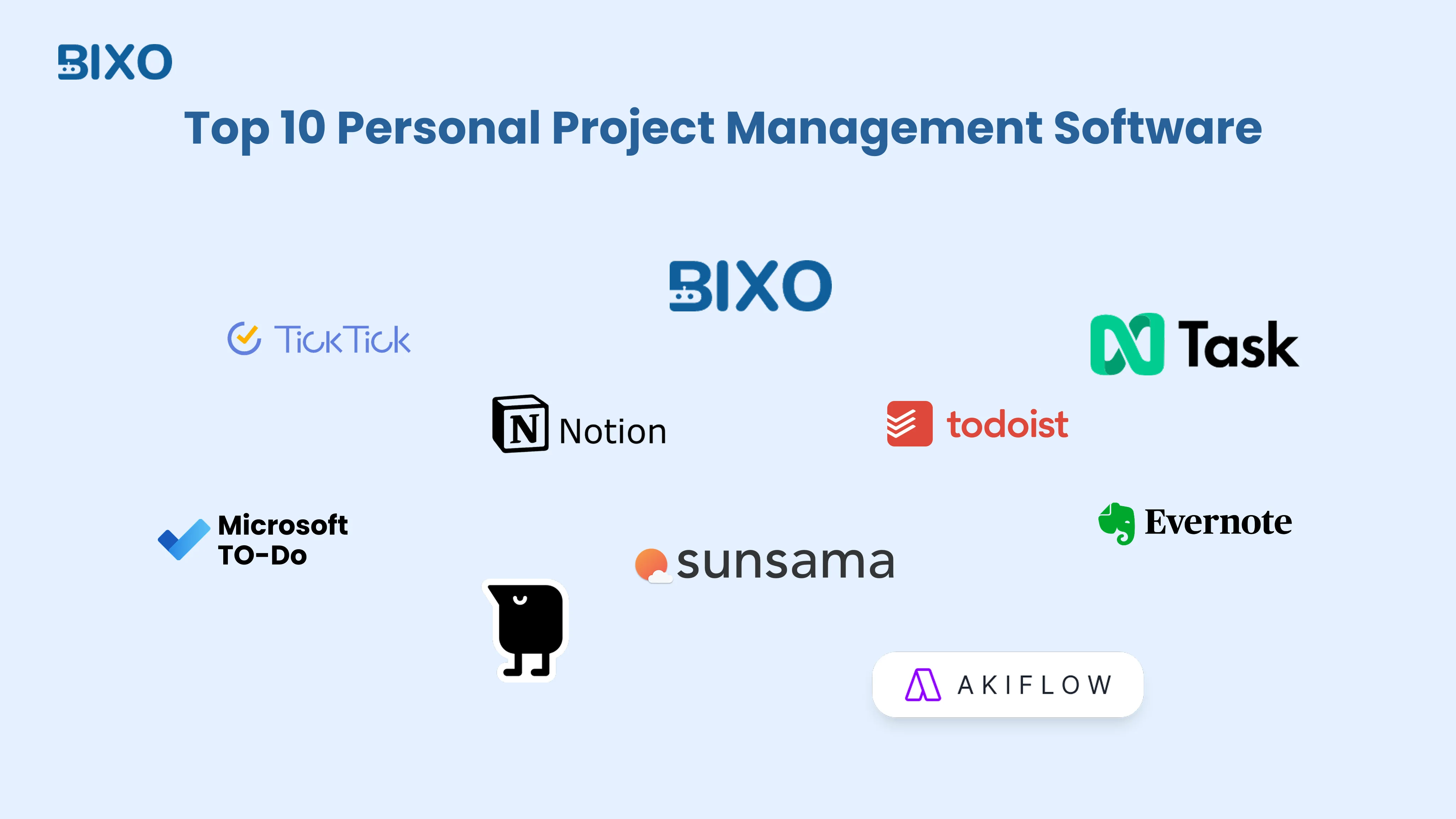
Top 10 Personal Project Management Software You Must Know
Check out the best personal project management software to plan, organise, and track your daily tasks efficiently and improve focus and productivity.
Bhuvana Bitra |
Nov 28, 2025
×
Focus on what matters. BIXO handles the rest!